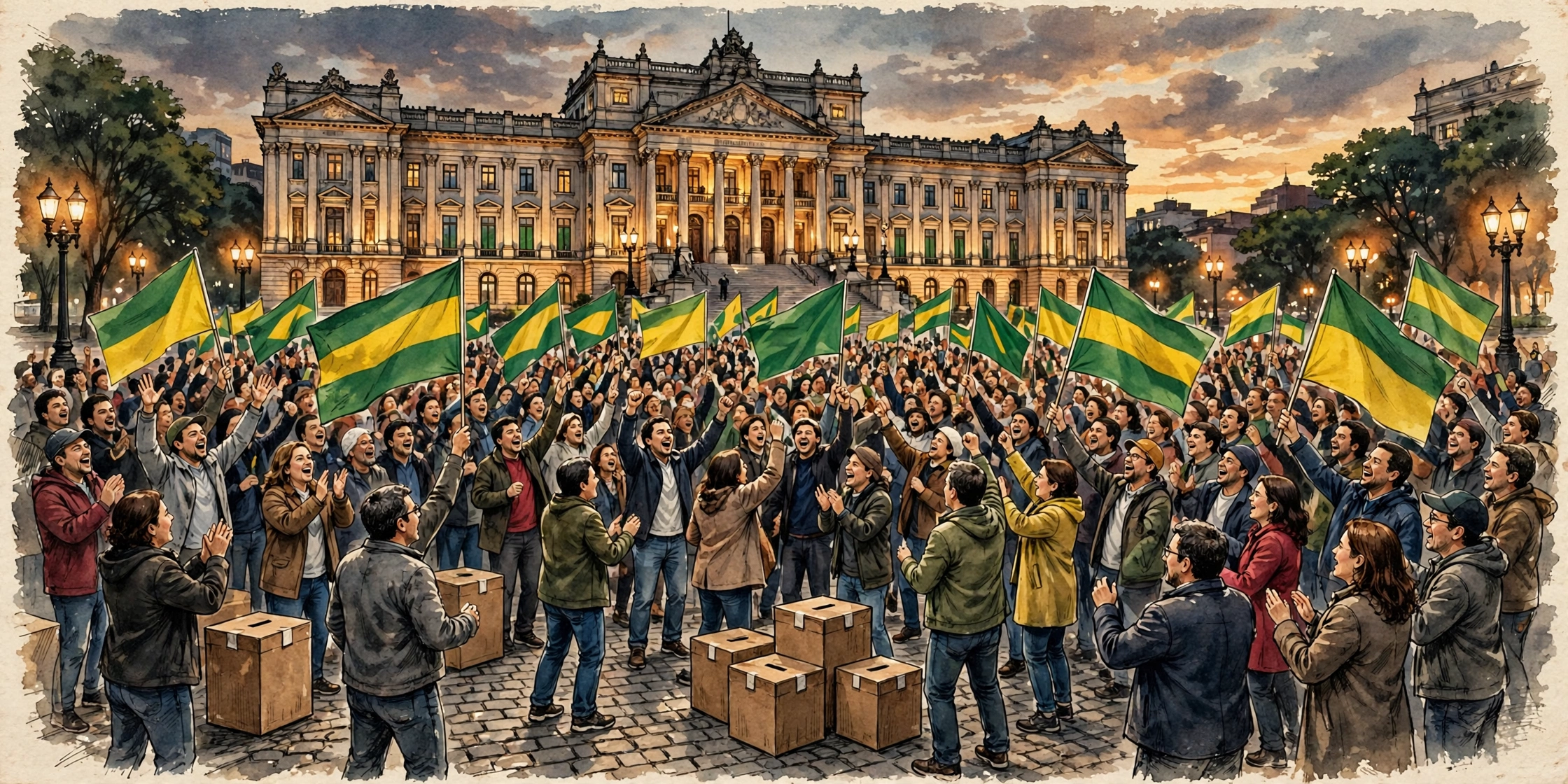










Brazilians are voting on Sunday in the Brazil election 2026 runoff, choosing between President Luiz Inácio Lula da Silva and Senator Flávio Bolsonaro in one of the most closely watched votes in Latin America this year. Neither man won outright in the first round on 4 October, so the presidency of the region’s largest country and economy now comes down to a head-to-head contest.
Table of Contents
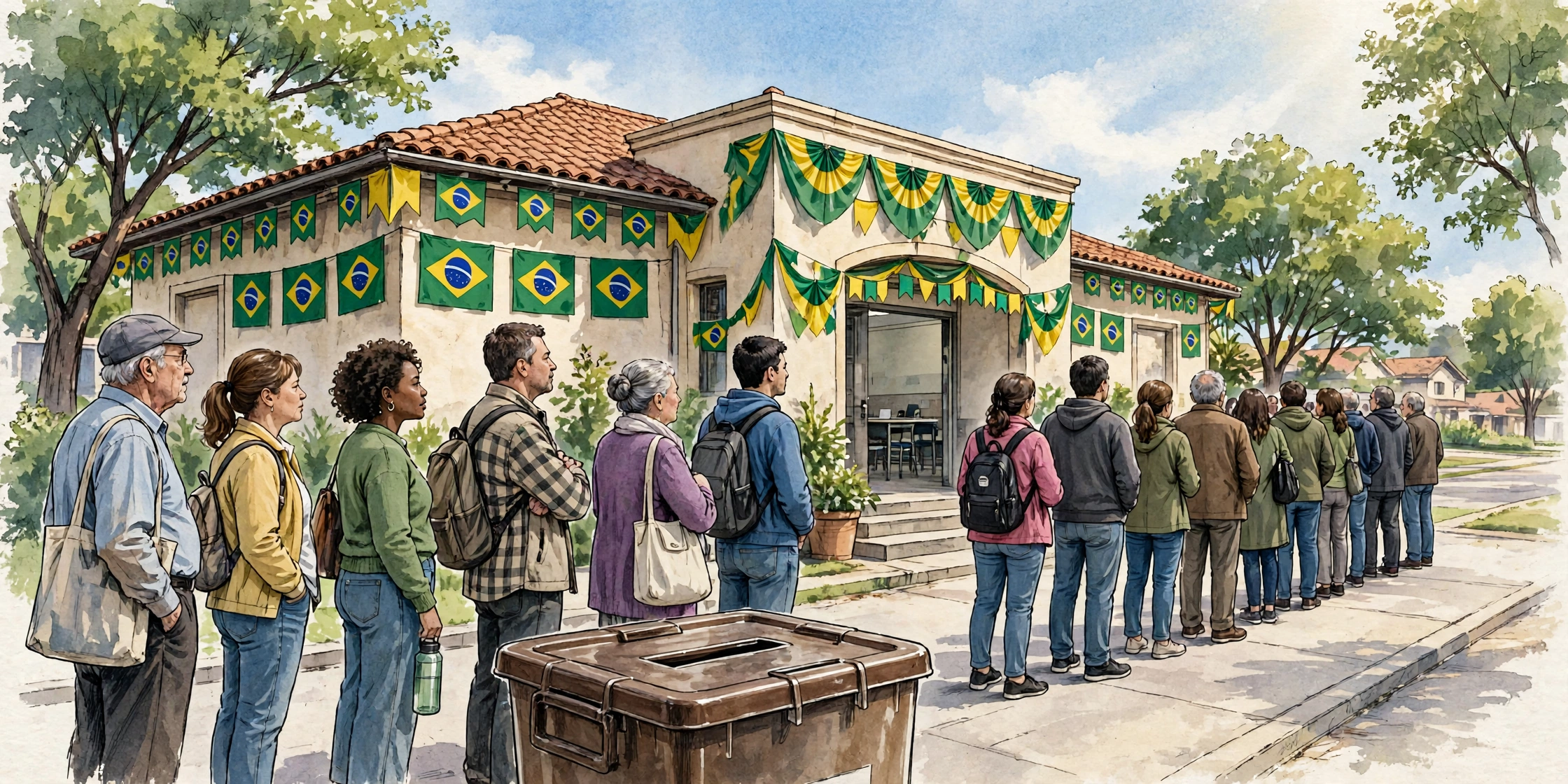
Polling stations opened across Brazil’s 26 states and the federal district on Sunday morning, with the result expected on Sunday evening local time. Voting is compulsory for most Brazilian adults, and more than 150 million people are eligible to cast a ballot.
A first round that shocked the pollsters
The first round produced a surprise. Flávio Bolsonaro, the 45-year-old son of former president Jair Bolsonaro, finished first with 47.03 percent of valid votes — about 56.1 million ballots, according to Brazil’s Superior Electoral Court. Lula, 80, who is seeking a fourth non-consecutive term, took 45.16 percent, or about 53.9 million votes. Just over 2.2 million votes separated the two men.
Because Brazilian law requires a candidate to win more than half of all valid votes to win outright, the two highest-placed candidates advanced to Sunday’s runoff. Blank and spoiled ballots do not count toward that threshold.
The result defied most pre-election polling, which had generally put Lula narrowly ahead. Bolsonaro’s first-place finish also capped a strong night for the right: his Liberal Party emerged as the largest force in the lower house of Congress and gained ground in the Senate, while allies of the Bolsonaro family won races including the governorship of São Paulo, the country’s most economically important state.
What the two candidates are promising
The Brazil election 2026 runoff has been fought over the economy, crime, corruption and Brazil’s place in the world. Lula has campaigned on economic development and social inclusion, and has urged Brazilians who stayed home in the first round to vote this time. After casting his ballot in the first round, he warned that the choice was between democracy and what he called “barbarism”.
Bolsonaro, for his part, has said Brazil wants change and that he would put ordinary Brazilians at the centre of his government. He has pledged to seek legal pardons for his father and others convicted over the storming of government buildings in January 2023 after his father’s election defeat. Jair Bolsonaro is serving a 27-year prison sentence for masterminding a failed coup attempt.
Endorsements have split in revealing ways. Ronaldo Caiado, who finished fifth in the first round, announced his support for Bolsonaro, while two other eliminated candidates said they would endorse neither man — leaving millions of first-round voters still to be won over.
Why the world is watching the Brazil election 2026
The outcome will shape far more than Brazil. As Latin America’s largest economy, Brazil’s direction on trade, the environment and relations with the United States matters across the region, and much of the continent has already shifted to the right in recent elections. Lula has accused the Trump administration of trying to tilt the race, saying on a podcast that Washington would “try to interfere here” and “try to help the other side win the elections”.
For voters, though, the decision is closer to home: jobs, prices, safety on the streets and trust in politics. Sunday’s Brazil election 2026 runoff will answer whether Brazil sticks with its veteran left-wing president or hands power to the Bolsonaro family’s next generation.
The count begins as soon as polls close, and Brazil’s electronic voting system usually delivers a clear result within hours.
Read More on Roz Khabar: