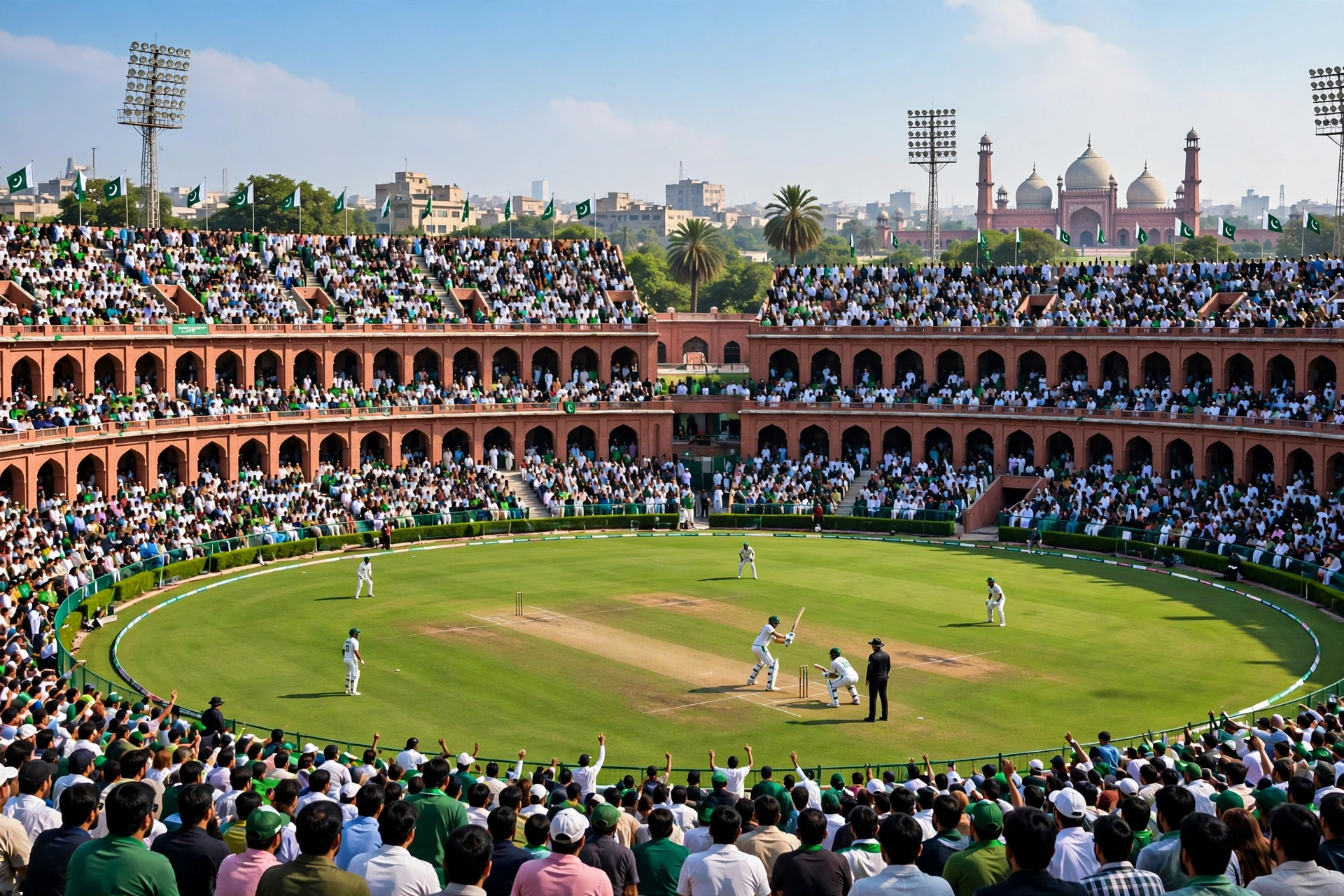











Two ODI world records in four days is the kind of week cricket fans dream about, and the Pakistan-hosted ODI tri-series delivered exactly that. Between Rawalpindi on 22 October 2026 and Lahore on 25 October 2026, the record books were rewritten twice, and England found themselves on the wrong side of both pieces of history. First came a run chase so large that only one bigger chase has ever succeeded in the format. Then came a last-wicket rescue so unlikely that it broke a record that had stood for more than half a century.
Table of Contents
First ODI world record: Sri Lanka chase 430 after Brook’s double century
Rawalpindi produced a match that felt impossible even while it was happening. England captain Harry Brook played one of the great one-day innings, scoring 202 off 116 balls with 21 fours and 10 sixes. He reached his double century in just 114 balls, the fastest double century in ODI history, beating Shubman Gill’s previous mark of 117 balls. Brook also became the first English batter ever to score an ODI double century, passing Ben Stokes’ England record of 182.
England finished on 429 for 4, the highest men’s ODI total ever made on Pakistani soil. Joe Root made 69 and Will Jacks finished unbeaten on 66.
Pavan Rathnayake led the reply with 130, while Avishka Fernando made 97 and Dasun Shanaka smashed 97 off only 50 balls. Janith Liyanage then finished the job with 61 not out off 27 balls, and Sri Lanka reached 430 for 8 with one ball to spare, winning by two wickets. It was the second-highest successful run chase in ODI history, behind only South Africa’s famous chase of 435 against Australia in 2006. The two teams scored 859 runs in total, the second-highest match aggregate in ODI history.
Second ODI world record: Pakistan’s last-wicket miracle in Lahore
Four days later, Lahore produced an even more dramatic finish. England were bowled out for 241, with Ben Duckett scoring 105 and Shaheen Shah Afridi taking 4 for 46. Pakistan’s chase then fell apart, and when the ninth wicket fell the hosts were 154 for 9, still 88 runs short of victory.
What followed was one of the great escapes in one-day cricket. Shadab Khan, batting at number eight, scored an unbeaten 113 off 96 balls, his maiden ODI century. At the other end, last man Haris Rauf defended resolutely for 7 not out off 19 balls. Together they added an unbeaten 89 off 80 balls for the tenth wicket, and Pakistan reached 243 for 9 to win by one wicket with 17 balls to spare.
That stand set a precise and important record. It is the highest tenth-wicket partnership in a successful ODI run chase, breaking a 51-year-old record: the 64 runs added by West Indies pair Deryck Murray and Andy Roberts against Pakistan at Edgbaston in the 1975 World Cup. It is not the highest tenth-wicket stand of all time. That overall record remains 106 not out by Vivian Richards and Michael Holding in 1984, while Pakistan’s highest overall tenth-wicket stand is 103 by Mohammad Amir and Saeed Ajmal in 2009. The Lahore record is special because it was made while winning a chase, with the match on the line and only one wicket in hand.
Why these ODI world records matter
Both records say something larger about modern one-day cricket. In Rawalpindi, a team scored 429 and still lost. In Lahore, a team nine wickets down and 88 runs short still won. The tri-series, featuring Pakistan, England and Sri Lanka, has therefore given fans two very different kinds of history: a festival of batting in Rawalpindi, and a lesson in nerve in Lahore.
For England, the week has been painful: they lost after posting 429, then after reducing Pakistan to 154 for 9. For Sri Lanka and Pakistan, the two results are landmarks their supporters will retell for years. Two records fell in four days, in the same tournament, both involving England. That is what makes this tri-series already historic.
Read More on Roz Khabar: