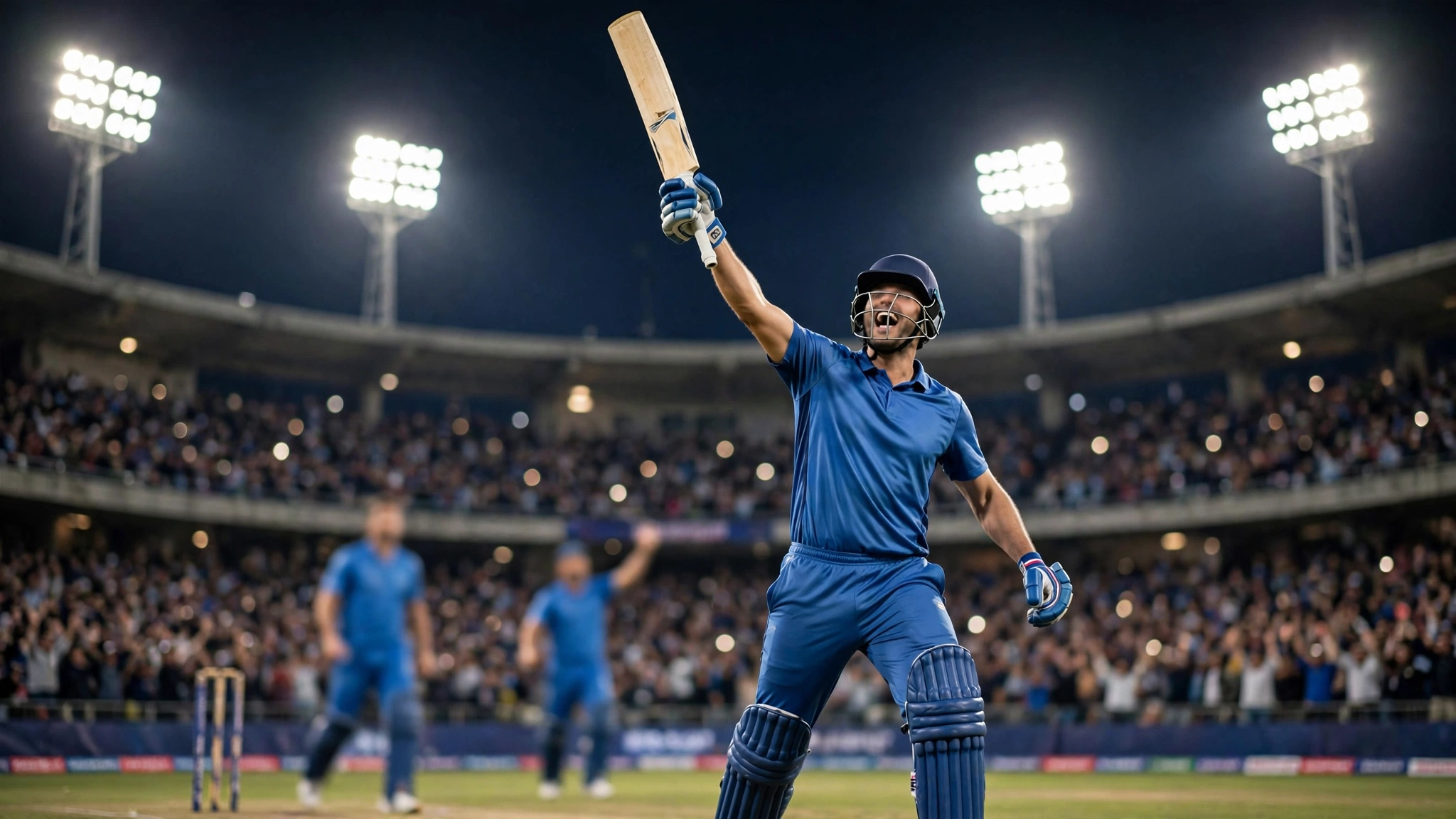











The five-match series was effectively settled long before the floodlights had fully taken hold in Wellington, because the India vs New Zealand 3rd T20I produced a chase so violent that a target of 199 — the kind teams usually defend with pride — was hunted down in 13.2 overs, with six wickets standing and 40 balls never needed, wrapping the series up at 3-0 with two matches still to play.
Table of Contents
India vs New Zealand 3rd T20I: a hundred built in thirty-five balls
Abhishek Sharma’s innings did not build so much as detonate in stages: a fifty raised from just fifteen deliveries, a hundred completed off his 35th ball, and a final tally of a 38-ball 113 that sat comfortably at the top of the innings. Eleven sixes cleared the rope and nine fours raced away along the turf, meaning the boundaries alone carried him beyond three figures, and the player-of-the-match decision was among the easiest the officials will make all tour.
What separated the knock from a mere slog was its refusal to favour one side of the ground: balls disappeared over the ropes straight and square alike, anything fractionally short was climbed into, and anything full was driven through the off side, so that no field setting survived contact for long. New Zealand kept rotating their attack hunting a quiet over, and never found one.
A chase that was already finished by the end of the powerplay
The opening partnership did the structural damage before the innings was seven overs old. Abhishek and Vaibhav Sooryavanshi ransacked the fielding restrictions to the tune of 118 without loss from the first six overs, and their stand had swollen to 133 inside 7.1 overs before New Zealand finally separated them, by which point the required rate had slumped from nearly ten an over to something closer to a stroll.
Sooryavanshi’s contribution was the perfect supporting riot — 45 runs ransacked from only 19 balls, split evenly between four fours and four sixes, his one job to keep the pressure from pooling at either end. Once the pair were parted, the remainder was clerical work: Sanju Samson kept the scoreboard company with 18 from 13 balls, Naman Dhir stayed unbeaten on four, and India signed the chase off at 199 for four with the evening still young.
Rewind: how New Zealand built 198 for three — and why it felt twenty short
None of this was the script after the toss. Shreyas Iyer won it for India and chose to bowl, and for the first half of the night New Zealand played their part well, assembling 198 for three — a scoreboard that, on another evening, against almost any other chase, would have been a winning one.
Daryl Mitchell gave the innings its skeleton, carrying his bat for an unbeaten 89 constructed from 52 balls and divided between five fours and five sixes, patient through the middle overs and increasingly violent towards the close. Finn Allen had earlier lit the fuse with 40 from 25 balls at the top, and Bevon Jacobs — unbeaten on 39 from 23 deliveries — stayed with Mitchell to the finish, while an Indian attack in which three separate bowlers managed a single wicket each did enough to keep the total below 200.
India vs New Zealand 3rd T20I: resistance that arrived after the verdict
Two New Zealand bowlers, to their credit, refused to be swept along: Mitchell Santner, who also claimed the wicket of Iyer, conceded only 17 runs across his three overs — an economy figure from a different match — while Kyle Jamieson finished with two wickets for 45. The trouble was timing; by the time either man found any control, the contest they were trying to save had already been settled in the powerplay.
What a 13.2-over chase really tells us
Strip away the highlight reel and this becomes a lesson in where the shortest format is heading. India’s method is now a template rather than a gamble: spend the powerplay like a team that treats wickets as a renewable resource, drag the asking rate below a run a ball while the field is up, and 199 becomes administration rather than adventure. New Zealand’s problem was not the 198 their batters produced — it was a first six overs with the ball that yielded no wicket and no pause, which means their batters may need to budget for 220 simply to feel safe.
With two matches left and only pride to defend, the hosts now play the rest of the series under the shadow of this night — because long after the 3-0 scoreline is forgotten, the India vs New Zealand 3rd T20I will be remembered for a hundred that took 35 balls and a chase that barely took longer than the innings break.