










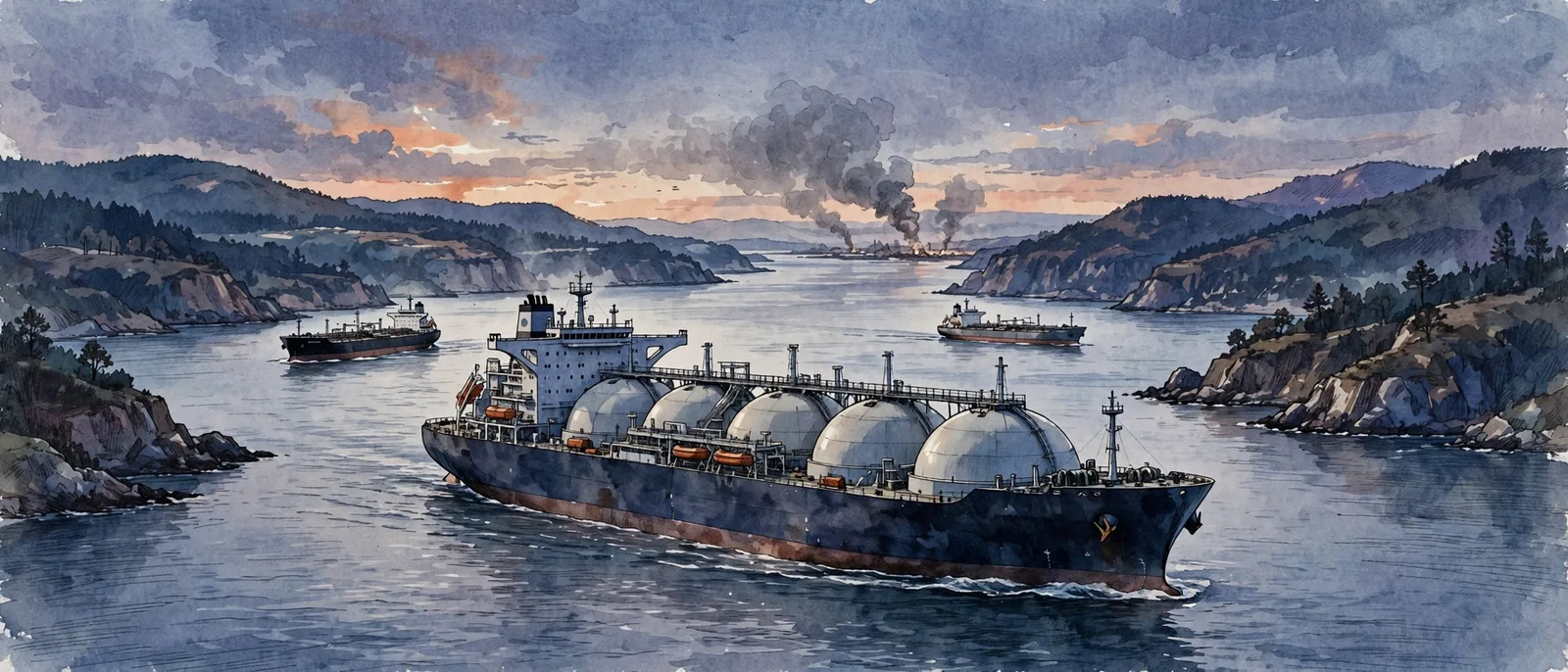
The Qatar LNG carrier attack that struck the vessel Al Mayeda on the evening of Friday, 30 October has, in the space of a single weekend, become the focal point of a fast-moving maritime crisis in the Gulf, because a procession of governments from Doha to Abu Dhabi, Riyadh and Manama has now condemned the assault in strikingly similar language, warning that attacks on energy shipping threaten not only crews and cargoes but the security of global energy supplies themselves. The carrier, owned by Qatar Gas Transport Company, known as Nakilat, was sailing through Gulf waters loaded with liquefied natural gas from Qatar when it was hit by unidentified objects, and though no crew members were injured and no pollution was reported, the diplomatic shockwaves have kept growing.
Table of Contents
What gives the Qatar LNG carrier attack its particular edge is a startling detail reported by Bloomberg, citing people with direct knowledge of the matter, that Iranian authorities had given the vessel a green light for safe passage through the Strait of Hormuz only hours before it came under fire, a claim that sits uneasily alongside the wider pattern of attacks on commercial shipping in the same waters. The Marshall Islands-flagged carrier, which had been heading towards the waterway with its Qatari cargo, turned around after the attack and headed back into the Persian Gulf, according to ship-tracking data, a retreat that speaks volumes about how unsafe even a supposedly cleared voyage now feels.
Gulf States Unite After the Qatar LNG Carrier Attack
The diplomatic response to the Qatar LNG carrier attack arrived in waves over Sunday and Monday, beginning with Qatar’s own Foreign Ministry, which on Sunday expressed strong condemnation and denunciation of the assault, reserved Qatar’s right to take all necessary measures under international law and the United Nations Charter to protect its assets, vessels and crews, and announced that an investigation had begun to establish the circumstances and identify those responsible. The ministry warned that reckless attacks on energy carriers could carry grave consequences for regional security, the global economy, the marine environment and the water security of countries across the region, language that deliberately framed a single ship’s ordeal as a threat to everyone.
Within hours, the Qatar LNG carrier attack had drawn matching condemnations from the United Arab Emirates, Saudi Arabia and Bahrain, each stressing solidarity with Qatar and calling for urgent international action to guarantee freedom of navigation and the safety of commercial vessels in the Gulf’s critical waterways. The UAE’s Foreign Ministry, in a statement on Monday, described the attack as a grave threat to maritime safety and global energy supplies with serious environmental repercussions, while Bahrain called on the United Nations Security Council to take decisive action to prevent recurring attacks and hold perpetrators accountable, a demand that lifts the incident from regional protest to a question for the world’s highest security body.
A Wider Pattern Behind the Qatar LNG Carrier Attack
The Qatar LNG carrier attack did not occur in isolation, and that is precisely why it has alarmed shipping and energy markets, because it followed reports that the Panama-flagged tanker Louise 1 had been attacked with limpet mines near Khasab in Oman, where a small boat reportedly attached two explosive devices to its hull above the waterline, triggering a fire in the engine room, and that the Liberia-flagged crude carrier Arzanah had suffered a projectile attack in the Strait of Hormuz. On Sunday, the United Kingdom Maritime Trade Operations centre relayed a distress call reporting yet another vessel struck by an unknown projectile inside the Strait, at 15:09 UTC, without identifying the ship or its flag, adding to a sense that the waterway is entering a dangerous new phase.
Iran’s Islamic Revolutionary Guard Corps Navy added its own dramatic claim to the Qatar LNG carrier attack weekend, saying two oil tankers, including a supertanker, had exploded after striking naval mines while attempting to navigate an unauthorised route through the Strait, an assertion that could not be independently verified and that sits alongside the separate reports of mine and projectile attacks. Nakilat itself has said only that Al Mayeda remained safe and operational while an assessment of the incident continued, and that it was coordinating directly with the vessel, its crew and regional maritime security authorities, carefully avoiding any claim about who struck the ship or what exactly hit it.
Why the Qatar LNG carrier attack Matters for the World
Looked at from the perspective of anyone who heats a home, fills a car or runs a factory, the Qatar LNG carrier attack matters far beyond the Gulf, because roughly a fifth of the world’s petroleum normally flows through the Strait of Hormuz, and liquefied natural gas from Qatar lights homes and powers industry across Asia and Europe. If shippers begin to treat the waterway as too dangerous, or insurers raise war-risk premiums sharply, the cost of energy could climb for consumers thousands of miles from the Gulf, turning a maritime incident into a household bill, and that is the chain of consequences Gulf governments are warning about when they speak of global energy security.
For now, the Qatar LNG carrier attack remains an investigation without a named attacker, a carrier that survived without casualties or pollution, and a region united in condemnation but still searching for a way to protect its shipping, and the coming days will test whether international pressure can calm the Strait or whether the pattern of attacks hardens into a new normal. What is certain is that the weekend’s events have already changed the calculus for every captain, insurer and energy buyer watching the Gulf, because a voyage that had reportedly been approved hours earlier still ended with a ship turning back, and that single fact will linger long after the Qatar LNG carrier attack fades from the headlines.